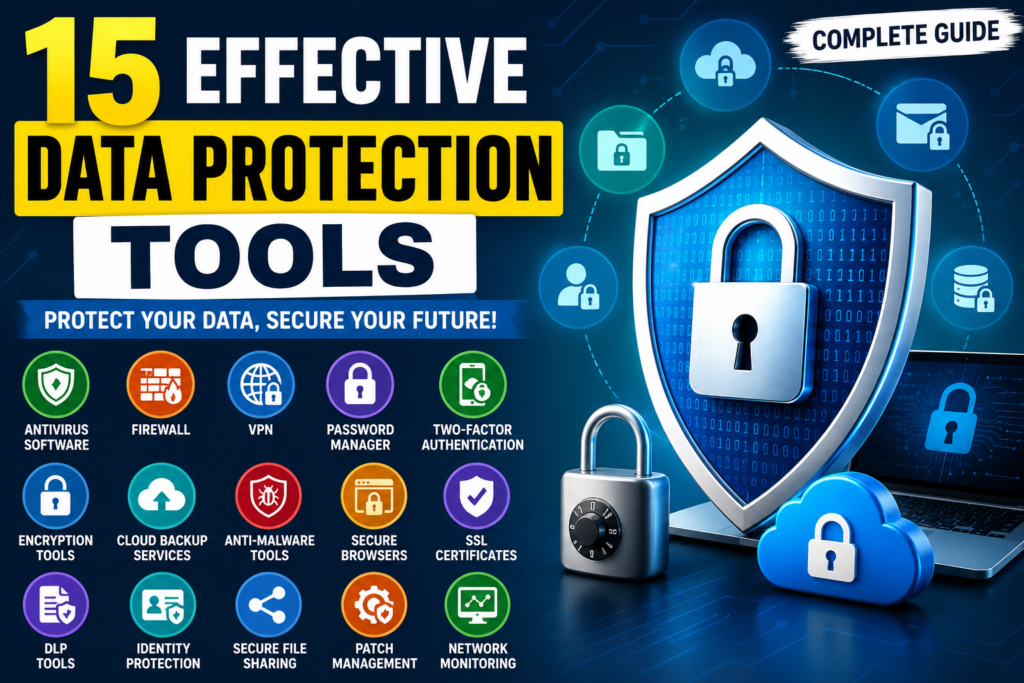
data protection today is very important because our personal information, online accounts, and business data are always at risk. Hackers, viruses, and online threats can cause serious damage. That is why different tools are used to keep data safe and secure.
Below are 15 important data protection tools with simple explanations:
1. Antivirus Software
Antivirus software protects your computer from harmful viruses, spyware, and malware. It scans your system regularly and removes any suspicious files that can damage your data or slow down your device.
2. Firewall
A firewall works like a security guard between your device and the internet. It blocks unauthorized users and only allows safe traffic to enter or leave your system.
3. VPN (Virtual Private Network)
A VPN hides your real location (IP address) and encrypts your internet connection. This makes your online activity private, especially when using public Wi-Fi.
4. Password Manager
A password manager safely stores all your passwords in one place. It also helps you create strong and unique passwords so your accounts stay secure.
5. Two-Factor Authentication (2FA)
2FA adds an extra layer of security. Even if someone knows your password, they still need a verification code sent to your phone or email to log in.
6. Encryption Tools
Encryption tools convert your data into unreadable code. Only people with the correct key can unlock and read the original information.
7. Cloud Backup Services
Cloud backup services store your important files online. If your device is lost or damaged, you can easily recover your data from the cloud.
8. Anti-Malware Tools
These tools detect and remove harmful software like trojans, ransomware, and spyware that can steal or destroy your data.
9. Secure Browsers
Secure browsers protect your privacy by blocking ads, trackers, and unsafe websites that may collect your personal information.
10. SSL Certificates
SSL certificates secure websites by encrypting data between the user and the website. That’s why secure websites start with “https”.
11. Data Loss Prevention (DLP) Tools
DLP tools prevent sensitive data from being copied, shared, or leaked without permission. They are mostly used in companies.
12. Identity Protection Services
These services monitor your personal details like email or ID and alert you if someone tries to misuse your identity.
13. Secure File Sharing Tools
These tools allow you to send files safely over the internet using encryption so hackers cannot access them during transfer.
14. Patch Management Tools
Patch management tools update your software regularly. These updates fix security bugs and protect your system from new threats.
15. Network Monitoring Tools
These tools continuously check your network activity and detect any unusual behavior that could indicate a cyber attack.
